

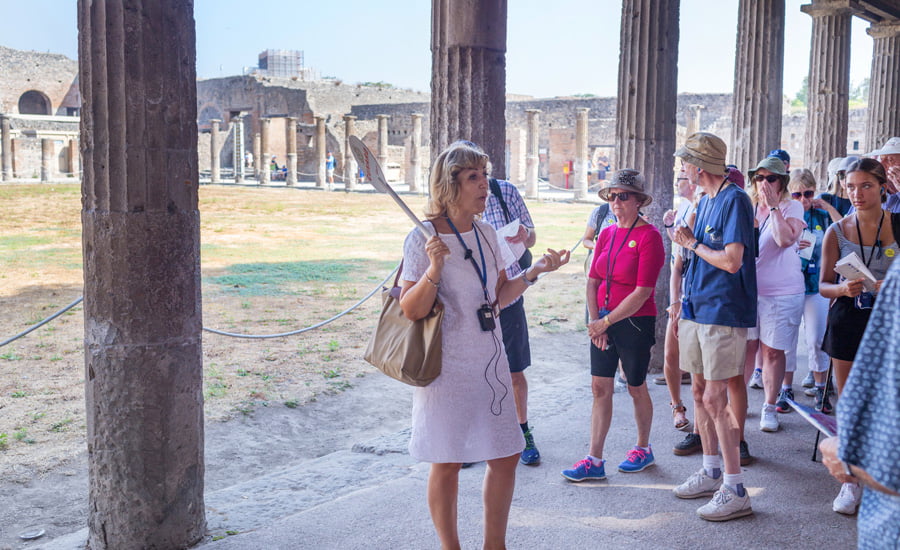
The travel and tourism industry connects people from different countries, languages, and cultures. As international travel continues to bring together tourists, business professionals, and local communities, the need for effective multilingual communication remains important. This creates opportunities for language professionals who want to work as travel interpreters.
Becoming a travel interpreter can be an excellent career choice for people who enjoy languages, traveling, meeting new people, and learning about different cultures. However, speaking two languages is not enough. Professional travel interpreters also need strong listening skills, cultural awareness, interpreting techniques, and the ability to communicate accurately in unfamiliar situations.
In this article, we will explore the essential steps to becoming a travel interpreter, the skills you need to develop, and how to build a successful career in this field.
What Is a Travel Interpreter?
A travel interpreter is a language professional who facilitates real-time communication between people who speak different languages while traveling or participating in travel-related activities.
Unlike written translators, who work with documents, travel interpreters communicate spoken messages between individuals or groups. They help travelers understand information, ask questions, interact with local people, and participate in activities where language differences could create barriers.
Travel interpreters may work in various situations, including:
- Guided tours and sightseeing activities
- Business trips and international delegations
- Factory visits and corporate tours
- Cultural exchanges and educational trips
- Meetings between foreign visitors and local organizations
- Trade fairs, exhibitions, and industry events
- Travel assistance and visitor support
- Conferences and tourism-related events
For example, a Vietnamese-English travel interpreter accompanying a group of international businesspeople in Vietnam may interpret conversations during company visits, facilitate discussions with local representatives, and explain cultural practices when necessary.
It is important to distinguish a travel interpreter from a tour guide. A tour guide primarily provides information about destinations, attractions, history, and local culture. A travel interpreter focuses on accurately communicating between people who speak different languages. Depending on the assignment, one professional may perform both roles if they have the appropriate skills and qualifications.
Steps to Become a Travel Interpreter
Step 1: Develop Strong Language Skills
The first step toward becoming a travel interpreter is developing professional proficiency in at least two languages.
You need to understand spoken language accurately and communicate the same meaning naturally in another language. Everyday conversational ability is a useful starting point, but professional interpreting requires a higher level of competence.
Focus on improving the following areas:
- Listening comprehension: Understand speakers with different accents, speaking speeds, and communication styles.
- Speaking fluency: Express ideas clearly, naturally, and confidently.
- Vocabulary: Build a broad vocabulary related to travel, transportation, accommodation, culture, business, and customer service.
- Grammar: Understand sentence structures well enough to convey complex messages accurately.
- Pronunciation: Speak clearly so that listeners can understand you easily.
- Register and tone: Adapt your language to formal meetings, casual conversations, and professional situations.
If you plan to work in Vietnam, for example, Vietnamese-English interpreting may be a useful language combination. Other combinations, such as Vietnamese-Chinese, Vietnamese-Korean, or Vietnamese-Japanese, may also be relevant depending on the clients and destinations you intend to serve.
The best approach is to choose a language combination that matches your existing abilities and the opportunities available in your target market.
Step 2: Learn Travel and Tourism Terminology
Travel interpreters regularly encounter terminology related to transportation, accommodation, tourism services, local attractions, and travel arrangements.
A strong vocabulary helps you communicate efficiently without having to search for words during conversations.
Important terminology areas include:
- Airports, airlines, and immigration procedures
- Hotels, reservations, and accommodation services
- Transportation and travel itineraries
- Restaurants, menus, and dietary requirements
- Historical landmarks and cultural attractions
- Travel insurance and emergency assistance
- Business visits and corporate hospitality
- Local customs, etiquette, and cultural practices
You should also become familiar with common expressions used when giving directions, explaining schedules, asking for clarification, and assisting travelers.
For example, a travel interpreter may need to explain that a meeting has been postponed, that a hotel reservation requires confirmation, or that a particular cultural site has specific visitor regulations.
Creating a personal glossary is an effective way to organize new terminology. Include the term in both working languages, its meaning, pronunciation where necessary, and an example of how it is used in context.
Reviewing this glossary regularly will help you build confidence and improve your interpreting speed.
Step 3: Understand Cultural Differences
Cultural awareness is one of the most important skills for a travel interpreter.
Communication involves more than words. Tone, gestures, politeness, social expectations, and cultural references can all influence how a message is understood.
A phrase that sounds friendly in one language may seem too direct or informal in another. Similarly, certain gestures or social customs may have different meanings across cultures.
To develop cultural competence, you should:
- Learn about the customs and traditions of the countries where you intend to work.
- Understand appropriate forms of address and levels of politeness.
- Become familiar with local dining etiquette and business customs.
- Study common cultural references and expressions.
- Avoid making assumptions about people based on nationality or background.
- Communicate cultural information respectfully and objectively.
For instance, when accompanying international visitors to a Vietnamese cultural attraction, an interpreter may need to explain a traditional custom that has no direct equivalent in the visitors’ language.
The goal is to make the information understandable without changing the speaker’s intended meaning or imposing personal opinions.
A culturally aware interpreter helps travelers communicate more comfortably and reduces the risk of misunderstandings.
Step 4: Learn Professional Interpreting Techniques
Knowing two languages does not automatically make someone a professional interpreter. You must also learn how to transfer spoken messages accurately and efficiently.
Two common interpreting techniques are consecutive interpreting and simultaneous interpreting.
Consecutive interpreting
In consecutive interpreting, the speaker delivers a portion of a message and pauses while the interpreter communicates it in the target language.
This method is commonly used for:
- Business meetings
- Corporate visits
- Small group tours
- Interviews and consultations
- Informal discussions
- Factory inspections and site visits
Consecutive interpreting is a useful starting point for aspiring travel interpreters because it allows time to process the message and organize the interpretation.
Simultaneous interpreting
In simultaneous interpreting, the interpreter communicates the message while the speaker continues speaking, with only a short delay.
This technique requires advanced listening, concentration, rapid language processing, and excellent coordination.
It may be required at international conferences, large tourism events, or formal meetings involving multilingual participants.
To develop interpreting skills, practice listening to short recordings and interpreting them aloud. Begin with simple conversations, then gradually move to longer speeches and more complex subjects.
You should also practice note-taking, memory techniques, paraphrasing, and managing unfamiliar terminology.
Step 5: Obtain Relevant Education or Professional Training
Formal education is not always a universal requirement for every travel interpreting assignment. However, relevant training can provide a strong foundation and help demonstrate your professional competence.
Consider studying translation and interpreting, linguistics, foreign languages, tourism management, or international communication.
Professional interpreting courses may cover:
- Consecutive and simultaneous interpreting
- Active listening and short-term memory
- Note-taking techniques
- Terminology management
- Public speaking and presentation skills
- Interpreting ethics and confidentiality
- Cross-cultural communication
- Professional conduct and client management
You may also benefit from tourism-related courses that introduce destination knowledge, visitor services, travel operations, and cultural heritage.
Before accepting assignments, check whether the relevant destination, employer, or type of work requires particular qualifications, licenses, or permits. Requirements can vary by country and activity, especially when interpreting is combined with regulated tour-guiding responsibilities.
The objective is to develop both linguistic competence and the professional skills needed to work confidently with clients.
Step 6: Gain Practical Experience
Practical experience is essential for becoming a capable travel interpreter.
Even if you have studied languages for many years, working in real situations can introduce challenges that are difficult to reproduce in a classroom.
For example, travelers may speak quickly, change topics unexpectedly, use unfamiliar expressions, or ask questions that require immediate responses.
You can begin gaining experience through opportunities such as:
- Assisting with small tourism events
- Supporting international visitors at exhibitions
- Volunteering at cultural exchange activities
- Practicing with simulated travel scenarios
- Participating in supervised interpreting exercises
- Working with travel agencies or language service providers
- Taking suitable entry-level interpreting assignments
When practicing, simulate situations such as hotel check-ins, airport transfers, restaurant visits, museum tours, and business meetings.
Record your practice sessions when appropriate and review them to identify errors in terminology, pronunciation, accuracy, and delivery.
After completing an assignment, request constructive feedback from clients or experienced colleagues. This will help you recognize areas for improvement and develop greater confidence.
Step 7: Develop Research and Preparation Skills
Professional travel interpreters should prepare carefully before every assignment.
Although some conversations are spontaneous, preparation helps reduce uncertainty and improves interpreting accuracy.
Before an assignment, gather information about:
- The client’s itinerary and objectives
- The people attending meetings or activities
- The locations being visited
- Relevant cultural and historical information
- Industry-specific terminology
- Names, titles, and company details
- Special communication requirements
- Potential logistical challenges
For a corporate visit, for example, the interpreter should understand the company’s products, the purpose of the meeting, and the basic terminology relevant to the industry.
For a cultural tour, preparation may involve researching historical events, local traditions, and the correct pronunciation of place names.
Prepare a glossary of important terms and confirm any unclear information with the client before the assignment begins.
Reliable preparation allows you to focus on listening and interpreting rather than searching for information during the conversation.
Step 8: Build Communication and Interpersonal Skills
Travel interpreters work closely with people from different backgrounds. Strong interpersonal skills can make assignments more efficient and create a positive experience for both clients and travelers.
Important skills include:
Active listening: Pay close attention to the speaker’s complete message before interpreting it.
Clear communication: Deliver information in a way that is easy to understand without unnecessary additions.
Professional confidence: Remain calm when conversations become complicated or unexpected questions arise.
Adaptability: Adjust to changes in schedules, locations, participants, and communication styles.
Diplomacy: Handle sensitive conversations respectfully without taking sides.
Problem-solving: Find practical ways to address communication difficulties while preserving the speaker’s intended meaning.
You should also understand the importance of neutrality. An interpreter’s responsibility is to communicate what each party says accurately, not to change a message, make decisions on behalf of the participants, or influence the outcome of a discussion.
If a statement is unclear, ask the speaker to clarify it rather than guessing. If you do not know a term, acknowledge the issue and seek an appropriate clarification when possible.
Professional honesty is essential to maintaining trust.
Step 9: Learn to Manage Travel Logistics
Travel interpreting often takes place outside a traditional office environment. You may need to accompany clients between locations, follow tight schedules, and adapt to unfamiliar surroundings.
Practical travel-management skills can therefore be valuable.
Learn how to:
- Review itineraries and confirm meeting times.
- Plan routes and allow sufficient travel time.
- Communicate schedule changes clearly.
- Prepare necessary documents and contact details.
- Carry appropriate equipment and reference materials.
- Coordinate with tour operators, event organizers, and clients.
- Understand basic travel safety procedures.
- Maintain professional conduct throughout the assignment.
Depending on the assignment, you may need to bring a notebook, a glossary, a mobile device, a charger, or a headset.
You should also clarify logistical arrangements with the client in advance, including transportation, accommodation, meals, working hours, overtime, and travel expenses.
Good preparation helps prevent avoidable delays and allows you to concentrate on your primary responsibility: facilitating accurate communication.
Step 10: Build a Professional Portfolio and Find Clients
Once you have developed your skills and gained relevant experience, begin building a professional portfolio.
Your portfolio should help prospective clients understand your language abilities, areas of expertise, and the types of assignments you can handle.
Consider including:
- Your language combinations
- Education and relevant qualifications
- Interpreting training and certifications
- Areas of specialization
- Types of interpreting services offered
- Relevant work experience
- References or testimonials, when available
- Professional contact information
Never disclose confidential client information or share recordings and documents without appropriate permission.
You can look for opportunities through translation and interpreting agencies, travel companies, event organizers, international businesses, professional networking platforms, and industry associations.
A clear professional profile can make it easier for potential clients to understand your capabilities.
When applying for assignments, be honest about your experience and only accept work that matches your current competence. For specialized legal, medical, or other high-stakes assignments, additional subject knowledge and relevant qualifications may be necessary.
Step 11: Continue Improving Your Skills
Becoming a travel interpreter is an ongoing learning process.
Languages evolve, travel trends change, and clients may introduce new terminology or communication requirements. Regular professional development helps you remain effective and competitive.
To continue improving:
- Read travel publications and tourism industry materials in your working languages.
- Follow developments in your destination markets.
- Practice interpreting regularly.
- Expand your subject-specific vocabulary.
- Attend interpreting workshops and professional events.
- Seek feedback from experienced interpreters.
- Learn to use digital dictionaries and terminology tools effectively.
- Review previous assignments to identify recurring mistakes.
You should also stay informed about professional ethics, confidentiality, and any applicable regulations governing your work.
Continuous learning helps you adapt to new assignments and build a reputation for reliability and professionalism.
What Skills Does a Successful Travel Interpreter Need?
A successful travel interpreter combines language proficiency with practical interpreting ability and cultural understanding.
The following skills are particularly valuable:
| Skill | Why It Matters |
|---|---|
| Language proficiency | Ensures accurate communication between speakers |
| Active listening | Helps capture the speaker’s complete message |
| Memory and note-taking | Supports accurate interpretation of longer statements |
| Cultural awareness | Reduces misunderstandings caused by cultural differences |
| Research ability | Helps prepare for unfamiliar topics and terminology |
| Interpersonal communication | Builds trust with clients and participants |
| Adaptability | Makes it easier to handle unexpected situations |
| Professional ethics | Protects confidentiality, neutrality, and accuracy |
| Time management | Helps assignments run smoothly |
| Subject knowledge | Supports accurate communication in specialized settings |
You do not need to master every skill immediately. However, you should develop them systematically and continue improving through practice and professional experience.
What Are the Career Opportunities for Travel Interpreters?
Travel interpreters can work in several professional settings, depending on their language combination, experience, and interests.
Tourism and Hospitality
Interpreters may support international visitors, travel companies, hotels, and tourism-related businesses. Their work can involve assisting with communication during tours, travel arrangements, and customer interactions.
Business Travel and Corporate Visits
International companies often need language support during factory tours, site inspections, business meetings, negotiations, and visits by overseas delegations.
Interpreters with relevant business vocabulary and industry knowledge may be well suited to these assignments.
Cultural and Educational Exchanges
Cultural organizations, educational institutions, and international programs may need interpreters to facilitate communication between visiting groups and local participants.
Trade Fairs and Exhibitions
Interpreters can help exhibitors, buyers, suppliers, and visitors communicate during international trade events.
Familiarity with the relevant industry can be particularly valuable in these settings.
Freelance Interpreting
Experienced interpreters may work independently and accept assignments from agencies, companies, travel operators, or individual clients.
Freelancing offers flexibility, but it also requires business skills, including client communication, scheduling, quotation preparation, and financial management.
Employment With Language Service Providers
Translation and interpreting agencies may recruit interpreters for travel-related assignments, business visits, and multilingual events.
Working with an established provider can offer opportunities to gain experience across different industries and client requirements.
Career opportunities and earnings vary depending on language combination, location, specialization, experience, assignment duration, and market demand.
Final Thoughts
Becoming a travel interpreter requires more than speaking two languages. It involves developing professional interpreting techniques, learning travel-related terminology, understanding cultural differences, and gaining practical experience in real communication situations.
The journey can be summarized in the following steps:
- Develop strong language skills.
- Learn travel and tourism terminology.
- Understand cultural differences.
- Master professional interpreting techniques.
- Obtain relevant education or training.
- Gain practical experience.
- Develop research and preparation skills.
- Strengthen communication and interpersonal abilities.
- Learn to manage travel logistics.
- Build a professional portfolio and find clients.
- Continue improving your skills.
With consistent practice, careful preparation, and a commitment to professional development, you can build the skills needed to pursue opportunities in travel interpreting.
Whether you want to work with international tourists, support corporate delegations, participate in cultural exchanges, or provide freelance interpreting services, focusing on accuracy, professionalism, and cultural awareness will help you establish a strong foundation for your career.
If your organization needs professional travel interpreting or Vietnamese-English interpreting support in Vietnam, working with an experienced language service provider can help facilitate clear communication between international visitors and local partners. Choosing interpreters with the appropriate language skills, subject knowledge, and assignment experience can make business visits, meetings, and travel-related activities more efficient and successful.
