

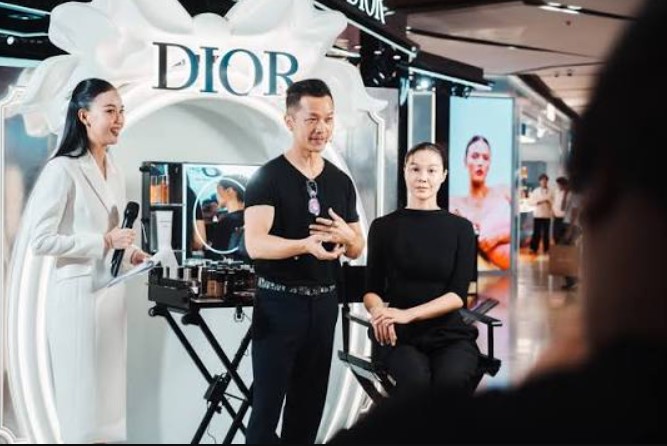
Steps to Become a French Interpreter in the Cosmetics Industry
If your goal is to become a French interpreter specializing in cosmetics, beauty, skincare, or luxury brands, you should develop three things in parallel: French proficiency, interpreting skills, and cosmetics-industry expertise.
1. Reach professional French proficiency
Aim for at least C1 French, with C2 being ideal for high-level interpreting.
Focus especially on:
- Listening comprehension
- Speaking fluently and naturally
- Professional vocabulary
- Understanding different French accents
- Formal and business French
You should also have an excellent command of your other working language, such as English or Vietnamese.
2. Learn cosmetics vocabulary in French
Build your own French–English or French–Vietnamese cosmetics glossary.
Start with categories such as:
Skincare
- moisturizer
- serum
- cleanser
- toner
- sunscreen
- anti-aging
- sensitive skin
- skin barrier
Makeup
- foundation
- concealer
- mascara
- lipstick
- eyeshadow
- blush
- makeup remover
Haircare
- shampoo
- conditioner
- hair mask
- scalp care
- hair treatment
Ingredients
- hyaluronic acid
- retinol
- niacinamide
- vitamin C
- peptides
- ceramides
- botanical extracts
Product claims
- moisturizing
- brightening
- soothing
- firming
- anti-aging
- dermatologically tested
- clinically tested
Don’t just memorize individual words. Learn how cosmetics professionals actually use these terms in sentences.
3. Learn the cosmetics business
A cosmetics interpreter needs to understand what people are talking about, not simply translate words.
Learn the basics of:
- Product development
- Formulation
- Ingredients
- Packaging
- Manufacturing
- Quality control
- Product testing
- Marketing
- Retail
- Distribution
- Brand management
- Regulatory requirements
- Beauty salons and professional cosmetics
For example, if someone says “la formulation doit être adaptée aux peaux sensibles”, you should immediately understand the technical/business meaning rather than translating each word mechanically.
4. Develop interpreting skills
Start with consecutive interpreting.
Practice situations such as:
- French sales representative → Vietnamese distributor
- French trainer → Vietnamese beauty consultants
- French brand manager → local marketing team
- French cosmetic expert → journalists
- French supplier → local manufacturer
Then move into simultaneous interpreting for conferences, seminars, product launches, and training sessions.
5. Practice with realistic cosmetics scenarios
For example, listen to a French cosmetics presentation and interpret:
“Cette gamme a été développée pour répondre aux besoins des peaux sensibles et contient des actifs d’origine naturelle.”
Then interpret it naturally into your target language.
The goal isn’t word-for-word translation. Your interpretation should sound like something a professional cosmetics specialist would actually say.
6. Learn business French
Cosmetics interpreting often involves business meetings rather than purely technical discussions.
Learn expressions related to:
- Negotiating prices
- Distribution agreements
- Minimum order quantities
- Sales targets
- Product launches
- Marketing campaigns
- Retail strategy
- Market positioning
- Brand identity
- Customer demographics
7. Learn French beauty and luxury culture
This is particularly important if you want to work with French brands.
Understand concepts such as:
- French beauty culture
- Luxury branding
- Haute beauté
- Parfumerie
- Skincare routines
- Pharmacy skincare
- Professional salon products
- Premium vs. mass-market cosmetics
You should be comfortable interpreting both technical language and marketing language.
8. Get experience in the cosmetics environment
Try to get opportunities involving:
- Cosmetics exhibitions
- Beauty trade shows
- Brand training
- Product launches
- Distributor meetings
- Factory visits
- Beauty conferences
- Sales meetings
- French cosmetic companies
Even assisting an experienced interpreter can give you valuable industry knowledge.
9. Build a specialized portfolio
Instead of presenting yourself simply as:
“French Interpreter”
you can eventually position yourself as:
“French–Vietnamese Interpreter specializing in Cosmetics, Beauty & Luxury.”
Your portfolio could demonstrate your knowledge of:
- Skincare
- Makeup
- Fragrance
- Haircare
- Cosmetic ingredients
- Product training
- Sales and marketing
10. Develop a personal terminology database
This is one of the most useful habits for a specialized interpreter.
Create a spreadsheet with columns such as:
| French | English | Vietnamese | Context |
|---|---|---|---|
| peau sensible | sensitive skin | da nhạy cảm | skincare |
| actif | active ingredient | hoạt chất | formulation |
| texture | texture | kết cấu | product description |
| teint | complexion | làn da/tông da | makeup |
| parfum | fragrance | hương thơm | fragrance |
| lancement | launch | ra mắt sản phẩm | marketing |
Keep adding terminology whenever you encounter a new product, presentation, training session, or meeting.
A possible career path
French B2 → C1 → cosmetics vocabulary → interpreting training → cosmetics knowledge → practical interpreting → cosmetics specialization → industry experience → professional French cosmetics interpreter
If you’re already B2 or above in French, you could realistically start building your cosmetics specialization right now, even before becoming a fully qualified interpreter.
A particularly useful combination would be:
French + English + Vietnamese + interpreting + cosmetics knowledge + business/marketing knowledge
That combination can open opportunities with French cosmetics brands, distributors, manufacturers, beauty schools, trade shows, and luxury companies.
