

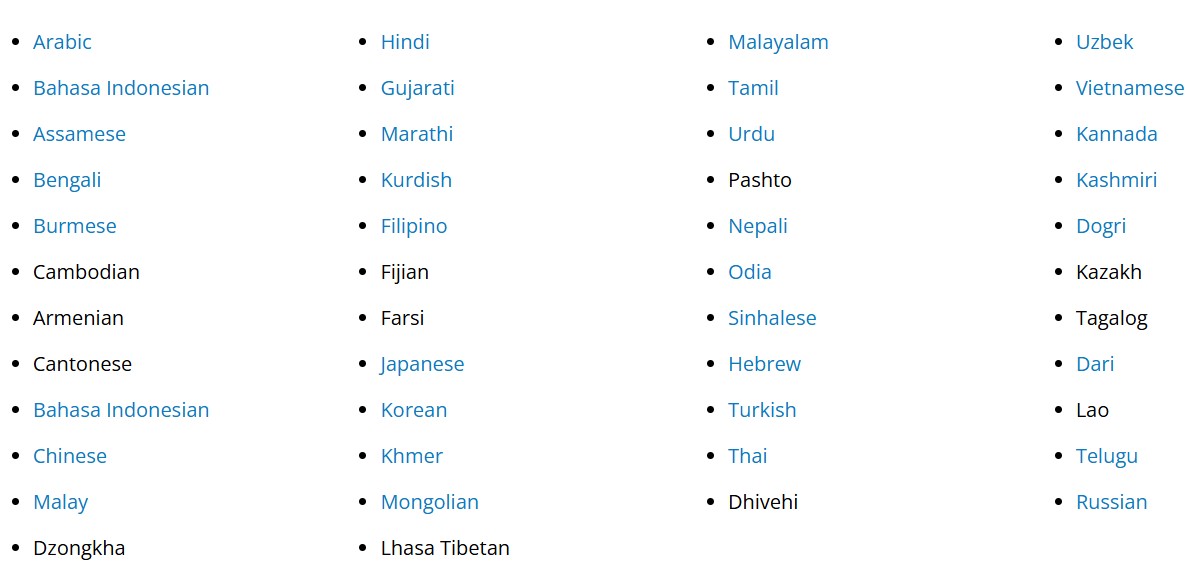
The current market demand for Asian language translation services (2025–2026) is not only strong—it’s one of the fastest-growing segments in the global translation industry. Here’s a clear, structured analysis based on recent data and trends:
1. Overall market growth (context)
- The global translation industry is worth roughly $60–75 billion and still growing steadily (~5–7% annually)
- Translation services account for about 70% of the entire language services market
- Growth is driven by:
- Global e-commerce
- Digital content explosion
- International business expansion
👉 Conclusion: Demand is rising overall, but where that demand comes from is shifting—and Asia is central.
2. Surge in demand for Asian languages (key trend)
One of the most important shifts:
- Asia-Pacific is now one of the fastest-growing regions (≈15% CAGR)
- Translation demand is pivoting toward Asian markets due to digital and economic growth
Fastest-growing Asian languages:
- Japanese: +74% YoY
- Thai: +76% YoY
- Chinese: +60%+ growth
- Vietnamese: steady growth (~8%)
👉 This shows explosive demand, especially in East and Southeast Asia.
3. Why Asian languages are in high demand
(1) Economic growth & global trade
- China, Japan, South Korea = major global economies
- Southeast Asia = fastest-growing digital markets
- Businesses need translation to enter and localize for these markets
➡️ Example: Chinese–English translation is critical for global trade and manufacturing.
(2) Rise of non-English internet users
- English content online is now below 50%
- Asian languages (Chinese, Hindi, Japanese, Thai, etc.) are rapidly growing
👉 Companies must translate to reach local users, not just rely on English.
(3) E-commerce & mobile-first markets
- SEA (Vietnam, Indonesia, Thailand) = mobile-driven economies
- Gaming, apps, and e-commerce require:
- UI localization
- subtitles
- product descriptions
➡️ This creates continuous, high-volume translation demand
(4) “Hyper-localization” trend
- Clients no longer want simple translation
- They want:
- cultural adaptation
- local tone
- market-specific messaging
👉 Especially important in Asia due to cultural and linguistic diversity
4. High-demand Asian language pairs
Common high-demand combinations:
- Chinese ↔ English
- Japanese ↔ English
- Korean ↔ English
- Vietnamese ↔ English
- Thai / Indonesian ↔ English
Also increasing:
- Asian → Asian (e.g., Japanese → Thai), not just via English
5. Industry shift: not just volume, but specialization
Demand is moving toward complex, high-value work:
- Legal translation
- Medical & clinical trials
- Technical documentation
- Marketing localization
👉 Clients now prioritize:
- Accuracy
- Cultural understanding
- Industry expertise
6. Impact of AI (important reality check)
What’s happening:
- Basic translation is becoming commoditized
- AI tools are reducing prices for simple tasks
But:
- Demand for human expertise remains strong in:
- nuanced languages (e.g., Japanese, Chinese)
- sensitive fields (legal, medical)
- creative content
👉 Result:
- More work in post-editing + high-skill translation
- Less demand for low-level, word-for-word translation
7. Key opportunities in Asian translation market
High-growth areas:
- Localization for apps, games, websites
- Subtitling & multimedia translation
- AI data annotation (multilingual datasets)
- Cross-border e-commerce content
👉 Especially strong in:
- China
- Japan
- South Korea
- Vietnam
- Thailand
8. Challenges
- Price pressure from AI tools
- Need for specialization
- Complex scripts (Chinese, Japanese, Thai)
- Cultural adaptation requirements
Final takeaway
The demand for Asian language translation services is:
- ✅ Rapidly growing
- ✅ Driven by digital economies and globalization
- ✅ Shifting toward high-skill, specialized work
But also:
- ⚠️ Becoming more competitive due to AI
- ⚠️ Requiring deeper cultural and industry expertise
