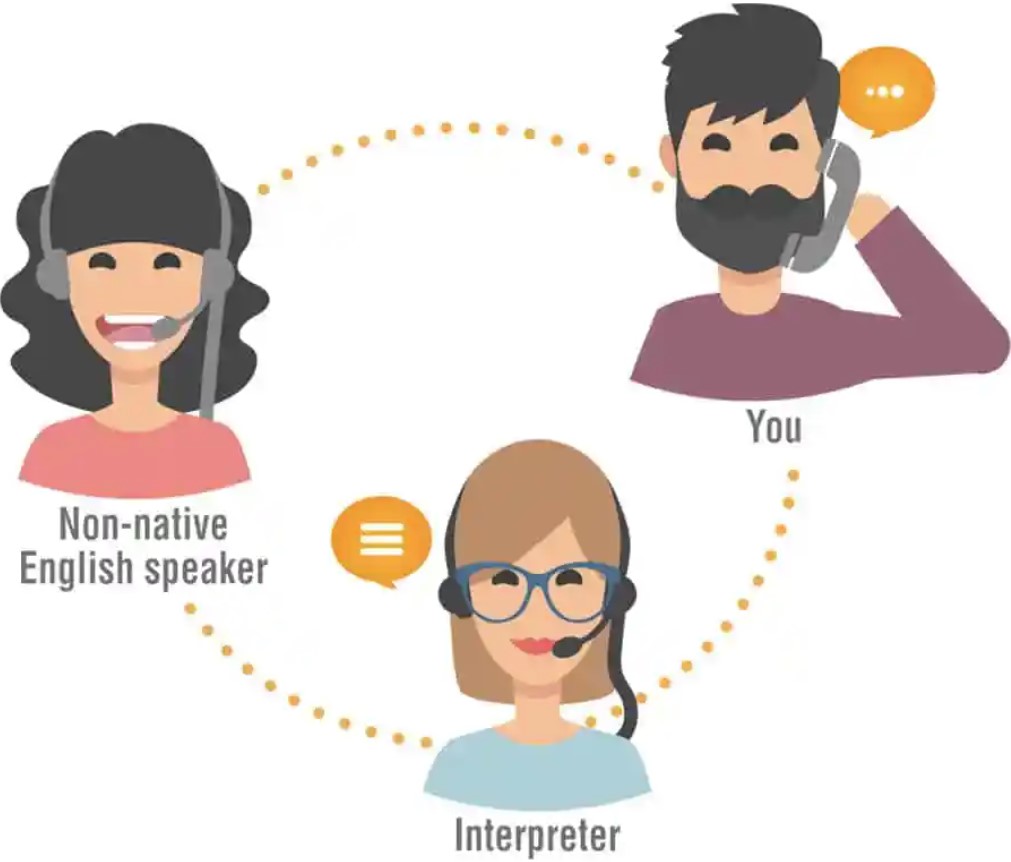
Telephone interpreting is a remote interpretation service where an interpreter facilitates communication between speakers of different languages over the phone. It is commonly used in healthcare, customer service, legal settings, and emergency situations.
Key Features of Telephone Interpreting
📞 Remote Access: The interpreter joins the conversation via phone, eliminating the need for physical presence.
⏳ Available On-Demand: Many services offer 24/7 access to interpreters for urgent situations.
🎧 Audio-Only Interpretation: Unlike video or in-person interpreting, telephone interpreting relies solely on verbal communication.
🗣 Can Be Consecutive or Simultaneous: Most telephone interpreting is consecutive, but some services offer simultaneous options.
Advantages
✅ Quick and convenient, accessible from anywhere
✅ Cost-effective compared to on-site interpretation
✅ Ideal for urgent or short conversations
Disadvantages
❌ No visual cues, making it harder to interpret emotions or body language
❌ Risk of poor audio quality or technical issues
❌ May not be suitable for complex or sensitive discussions
Would you like to know about best practices for telephone interpreting or recommendations for top service providers?