

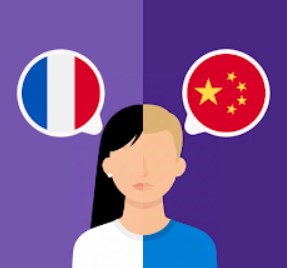
Choosing Your Path: Should You Pursue a Career in Chinese-Vietnamese or French-Vietnamese Translation?
The translation and localization industry in Vietnam is thriving, driven by robust international trade and deep global integration. For aspiring linguists deciding on a language pair, the choice often boils down to market demand, personal passion, and long-term career goals.
Two of the most prominent—yet distinctly different—paths are Chinese-Vietnamese and French-Vietnamese translation. While one offers massive volume and rapid business pacing, the other provides a specialized niche in diplomacy, culture, and European commerce.
If you are wondering which career path to choose, here is a comprehensive breakdown to help you make an informed decision.
1. The Chinese-Vietnamese Market: The Economic Powerhouse
China and Taiwan are among Vietnam’s largest trading partners. As a result, the demand for Chinese-Vietnamese language services is enormous, continuous, and spans across multiple sectors.
The Work Environment & Key Industries
If you choose this path, you will be at the heart of the Asian economic engine. The primary sectors requiring Chinese-Vietnamese translation include:
- Manufacturing & Supply Chain: Factory operation manuals, technical specifications, and quality control documents.
- E-commerce & Logistics: Product descriptions, import/export customs documents, and cross-border trade contracts.
- Entertainment & Media: Mobile gaming localization, film subtitling, and social media content (e.g., Douyin, Xiaohongshu).
Pros & Cons
- The Advantage: High volume and job security. There is a relentless demand for both freelance and in-house translators. Once you establish a network, finding daily projects is relatively easy.
- The Challenge: Fierce competition. Because many Vietnamese students study Mandarin, the entry-level market is highly saturated. To earn a premium rate, you must become an expert in specialized fields like engineering, legal contracts, or finance, while mastering the complexities of Hanzi characters.
2. The French-Vietnamese Market: Diplomacy, Culture, and Niche Expertise
While the sheer volume of French translation cannot match that of Chinese, French remains a language of immense prestige and specialized utility in Vietnam. As a member of La Francophonie, Vietnam maintains strong educational, diplomatic, and cultural ties with France, Belgium, and Canada.
The Work Environment & Key Industries
A career in French-Vietnamese translation leans heavily toward the academic, diplomatic, and high-end corporate worlds:
- International Organizations & NGOs: Official reports, governmental policies, and humanitarian project documents.
- Luxury & Specialized Industries: Cosmetics, fashion, aerospace (e.g., Airbus), and pharmaceuticals.
- Culture & Literature: Book translation, art exhibition brochures, and academic journals.
Pros & Cons
- The Advantage: A prestigious and less saturated niche. There are fewer French-Vietnamese translators in the market. If you have exceptional linguistic skills, you can command high rates and work on intellectually stimulating, high-profile projects.
- The Challenge: Lower project frequency. Finding a steady stream of work as a beginner can be difficult. Furthermore, French syntax and grammar are notoriously complex, requiring meticulous attention to detail and a highly refined writing style.
3. At a Glance: Which Path is Right for You?
| Feature | Chinese-Vietnamese | French-Vietnamese |
| Market Demand (Volume) | Very High – Continuous, daily demand | Moderate – Project-based, niche demand |
| Pacing & Deadlines | Fast-paced, often requiring quick turnarounds | Methodical, focusing on nuance and style |
| Primary Document Types | Commercial contracts, technical manuals, IT/Games | Diplomatic papers, literature, corporate legal |
| Competition Level | High at the entry-level | Low, but requires advanced mastery |
| Ideal Personality Type | Adaptable, fast-working, business-minded | Detail-oriented, academic, culturally focused |
The Final Verdict
Your choice ultimately depends on what kind of working lifestyle you envision:
- Choose Chinese-Vietnamese if: You want to dive into a high-energy, fast-paced market. If you are passionate about business, trade, and technology, and want the security of an abundant, never-ending workflow, this is the path for you.
- Choose French-Vietnamese if: You are drawn to the art of language. If you prefer working on high-impact diplomatic documents, literature, or corporate materials for European enterprises, and you enjoy crafting perfectly polished prose, this specialized niche will be highly rewarding.
At the end of the day, a successful translator is not defined solely by the language they choose, but by their subject-matter expertise and dedication to continuous learning. Whichever path you choose, mastering your niche will be the ultimate key to a thriving career in the localization industry.
