

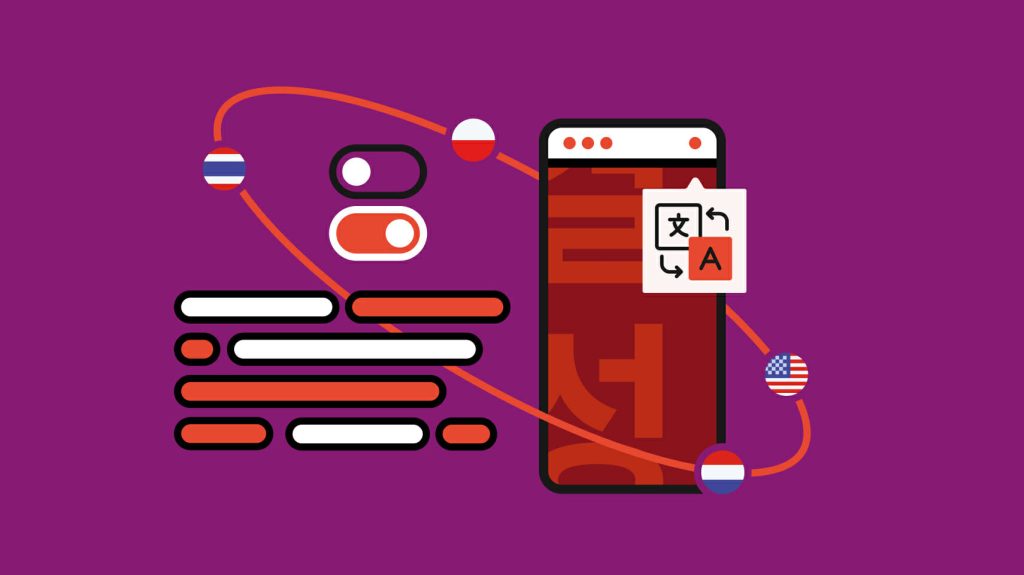
Mobile app localization is the process of adapting a mobile application for different languages, regions, or cultures. This goes beyond simple translation of text and involves making changes to the app’s content, design, features, and functionality to make it more relevant and accessible to users in specific locales.
Key Aspects of Mobile App Localization:
- Language Translation:
- Text translation is the most basic form of localization. All the app’s written content, such as menus, buttons, help sections, and notifications, should be translated into the target language. It’s important to note that translation should be culturally appropriate, as direct translations may not always make sense or resonate with local users.
- Cultural Adaptation:
- Cultural relevance is a critical aspect. Colors, images, and icons that are common or acceptable in one culture may not have the same meaning in another. For example, red may symbolize luck in some cultures, but danger or warning in others. App icons, symbols, and even names should be customized to match cultural norms and expectations.
- Date, Time, and Currency Formats:
- The way dates, times, and currencies are displayed can vary greatly across regions. For instance, the date format in the U.S. is “MM/DD/YYYY,” while in Europe, it’s “DD/MM/YYYY.” Similarly, currencies and units of measurement (kilograms vs pounds, miles vs kilometers) need to be displayed correctly for each region.
- Regulatory Compliance:
- Different countries may have different regulations governing apps, especially with regard to user privacy and data protection. Localization includes ensuring the app complies with local laws and guidelines (e.g., GDPR in Europe, or data protection laws in other regions).
- Support for Local Devices and Platforms:
- Sometimes localization involves ensuring the app functions optimally on region-specific devices, operating systems, or hardware. Certain devices might be more prevalent in some countries than others, so developers might need to optimize the app for those platforms.
- App Store Listing Localization:
- Beyond the app itself, localization also applies to app store listings. The app’s description, keywords, and screenshots should be tailored to the language and preferences of users in each region to increase discoverability and downloads.
- User Support and Customer Service:
- Localization may involve providing customer service options in local languages, including FAQs, chat support, or in-app support features. This ensures users can get help in their preferred language.
Why is Mobile App Localization Important?
- Reach a Global Audience:
- Localization enables your app to reach users in different countries, helping to expand your market and increase downloads. It’s essential if you’re aiming for international growth.
- Improve User Experience (UX):
- A localized app feels more intuitive to users since it aligns with their language and cultural expectations. This can lead to better retention rates and user satisfaction.
- Increase Revenue Potential:
- Offering your app in multiple languages and tailoring it to local preferences can boost user engagement and lead to higher sales, especially for apps in categories like gaming, shopping, and entertainment.
- Competitive Advantage:
- Localization allows you to stand out in a crowded app market. By providing a tailored experience, you can differentiate yourself from competitors who have not localized their apps.
Example:
Imagine you have a fitness app that’s originally in English. If you want to localize it for the Vietnamese market, you would:
- Translate all text into Vietnamese.
- Adjust any culturally specific content (e.g., exercise routines, diet plans) to be more relevant to Vietnamese users.
- Format time and date displays according to Vietnamese conventions.
- Ensure the app complies with local privacy laws.
- Provide customer support in Vietnamese.
- Optimize the app store description and keywords in Vietnamese for better discoverability.
Challenges in Localization:
- Time and Cost: Localization can be resource-intensive, requiring skilled translators, cultural experts, and developers to implement changes. However, the return on investment (ROI) can make it worthwhile.
- Maintaining Consistency: Ensuring the app works seamlessly across different languages and regions while maintaining a consistent user experience can be a challenge, especially if the app has frequent updates.
- Complexity of Cultural Sensitivity: Cultural differences can be subtle, so it requires in-depth understanding to avoid missteps. What works in one region may not be received well in another.
Conclusion:
Mobile app localization is more than just translation—it’s about adapting an app to make it suitable, culturally relevant, and user-friendly for a particular region. By localizing an app, you ensure a more inclusive and engaging experience for users, which can help expand your app’s reach and success in international markets.
See more: Vietnamese translation services
